Legacy
In memory of Natallia Adamovich
Natallia Adamovich
30 April 1954 (officially 1 May) — 7 September 2026
In loving memory of Natallia Adamovich — the only daughter of Belarusian writer and humanist Ales Adamovich. A Belarusian-literature philologist, museum professional, and guardian of his legacy, she devoted her life to returning her father’s writings and memory to people without censorship.
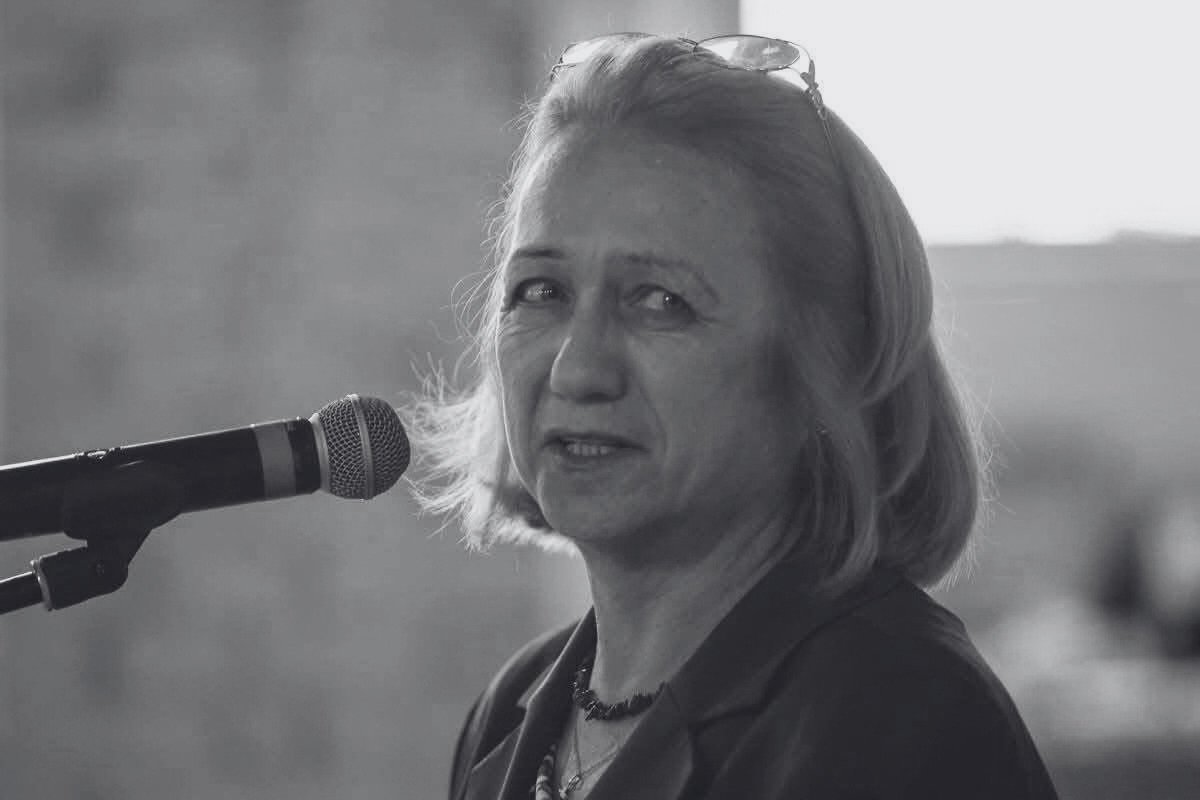
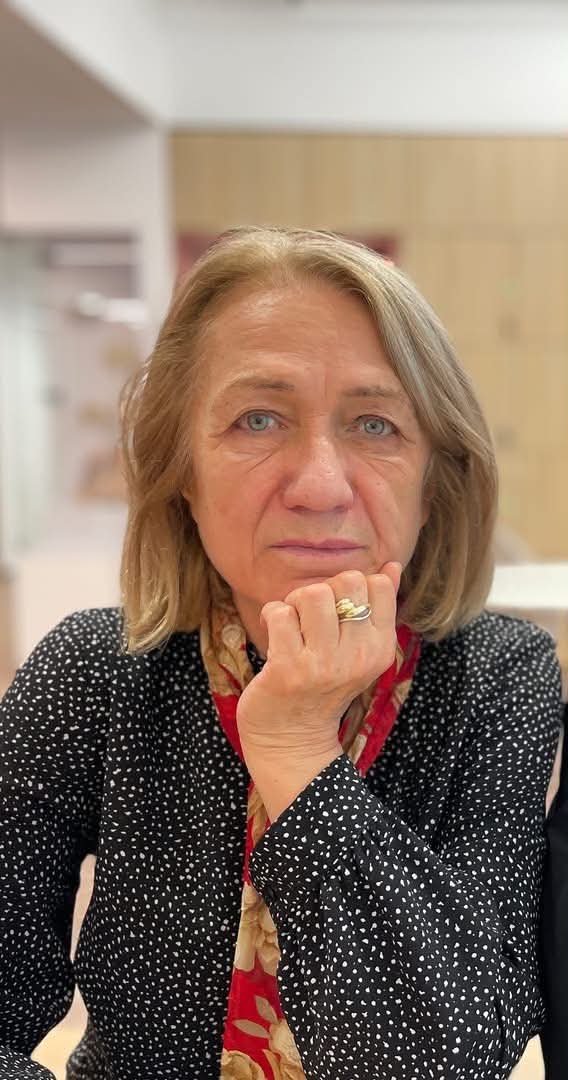
30 April 1954 (officially 1 May) — 7 September 2026
About Natallia Alexandrovna
Natallia Alexandrovna Adamovich was born on 30 April 1954; her official date of birth was recorded as 1 May. She was the only daughter of Belarusian writer and humanist Ales Adamovich. A Belarusian-literature philologist by training, she worked at the State Literary and Memorial Museum of Yakub Kolas until her final days, caring for its archives. After her father’s death, Natallia preserved and studied the family archive, assisted researchers, gathered materials, and defended the right to publish Ales Adamovich’s work without censorship. She held to her father’s ideals and believed that those forced to leave would be able to return to a free Belarus.
Photo archive
Work
Her life's work
Museum
Museum work
For many years, she devoted herself to the State Literary and Memorial Museum of Yakub Kolas. She worked with the museum archives and led guided tours, introducing visitors to the writer’s legacy.Memory
Support
She supported the Prypynak Adamovich initiative, the creation of the Ales Adamovich monument, the audio guide, and the website about his home places. Whenever possible, she also supported the Ales Adamovich Award.About the Adamovich StopBiography
Life and memory
The writer’s daughter
Natallia Alexandrovna was born on 30 April 1954; her official date of birth was recorded as 1 May. She was Ales Adamovich’s only daughter. She trained as a philologist of Belarusian literature. As she recalled, her father did not have more children because he feared that he could be arrested at any moment. While he was alive, Ales Adamovich told Natallia little about his work; only after his death did she understand the scale of what he had done. She did not like public speaking and always prepared well in advance, sometimes for an entire week.
Museum and archive
For many years, Natallia worked devotedly at the State Literary and Memorial Museum of Yakub Kolas, caring for archives and leading guided tours. After retiring, she sought to return to the museum and continue her work — and succeeded. After her father’s death, she also preserved and studied Ales Adamovich’s family archive, assisted researchers, and prepared materials for publication. She searched for new materials, wanted Adamovich’s works to appear in other languages, and worked on the history of how his works were created.
Preserving the legacy
Natallia compiled This Star Is Called Chernobyl from Ales Adamovich’s notebooks, letters, and speeches. She helped prepare his texts for publication and insisted that they appear without censorship. Together with Daniil Granin’s daughter, she gathered the history of how The Blockade Book was created and prepared introductions for editions to convey the story behind their writing. She was especially happy that I Am from the Fiery Village was published in German. Natallia supported projects preserving her father’s memory in Glusha and beyond, and was devoted to his legacy.
Recollections
Remembering Natallia
I met Natallia in Minsk, when I was working at the Ministry of Culture and she was at the Yakub Kolas Museum. We met and spoke about the legacy of Belarusian writers. At the time, Natallia was in touch with Iryna, the widow of Vasil Bykau; she was among the few people whom Iryna received at home. After I moved to Warsaw, we spoke even more, often about preserving the memory of Ales Adamovich and Andrei Arkhipenka’s projects in Poland. In our last telephone conversation, about a month before her death, Natallia shared news from literary museums and cultural life in Belarus and worried deeply about what was happening in the country. Yet our conversations were always full of optimism: she believed that everything would turn out well and that Belarus would see positive change. In parting she would say: “Hold on there — everything will be all right; we will live to see it.” She hoped to visit the Museum of Free Belarus and spoke of this more than once. Now the sense is especially painful of how many kind words, memories, and expressions of support we did not manage to share.
I have been researching Ales Adamovich’s work for several years and met Natallia in 2024, when the German translation of I Am from the Fiery Village was being prepared and then published as Feuerdörfer: Wehrmachtsverbrechen in Belarus-Zeitzeugen berichten by Aufbau. Thomas Weiler received the Leipzig Book Fair Prize for this translation in the Translation category in March 2025. I wrote the afterword to the edition, and during its preparation Natallia and I often spoke by telephone. In September 2025 she came to Berlin, where we met in person for the first time. She spent a week here; we spoke a great deal about Ales Adamovich’s work, his biography, and his human-rights work. Natallia was a very open, cheerful, fascinating person, and we quickly formed a warm personal bond — one could say we became friends. After she returned to Belarus, we remained in touch and discussed a Berlin conference on Ales Adamovich planned for January 2027, events for his official centenary in September, and plans for an exhibition in 2028. In our last telephone conversation, Natallia was delighted that her German visa had arrived and that she would be able to come. Afterwards we wrote to one another and talked about cats: she sent photos and videos, and when she stayed with us, she grew fond of our two cats. In her final message, she wrote that she wanted to send me one of Adamovich’s stories so that we could think together about what to do with the text. It was our last contact.
Natallia Aleksandrovna helped me with all my ideas: she sent materials, photographs, information, selected quotations from her father, and advised what to emphasise. She supported me not only in work with her father’s legacy. When I had housing difficulties in Minsk, I lived with her for three months, in Adamovich’s room, with his desk, books, and various materials. She also supported my mother, trying to send her 50 rubles each month for food for her cats and dog, knowing of her difficult circumstances and health problems. My mother treated Natallia to homemade preserves, including her favourite raspberry jam and walnuts. Once she told Natallia, “You are like a second mother to him.” Natallia replied: “And he is like a son to me.” She repeatedly said she would be grateful to me all her life for what I had done for the memory of her father. She supported my Taiwan-related projects and encouraged me to record and share my memories of the journey, calling it an important discovery for Belarusians. On 5 September, during a presentation of the audio guide at the Ivan Lutskevich Museum in Vilnius, I called her: Natallia was speaking with the museum’s staff and said she would visit if she had the opportunity. I could call her at any time to share my problems; she told me to call her rather than my mother, so that she would not worry. Natallia wanted me to find work in the field to which I was drawn. We also planned to assemble material for a book and publish it. As a philologist, Natallia always made sure that a text contained neither grammatical errors nor typos.
More recollectionsHide recollections
I remember how we met, although it was more than a quarter of a century ago. I remember the encounter because I noticed her eyes: she resembled her father in them very strongly. At the time I was writing an article about Ales Adamovich, and Natallia Aliaksandrauna helped me with documents and materials; she became my first and only adviser and assistant. Without her, there would have been no article.
Later I received an unexpected letter from Vasil Bykau: “...I read the feature about Adamovich with great interest. Bravo, bravo! Simply wonderful — so true and precise. And at the same time, with a passion born of a thirst for justice. In relation to A. A., this is excellent.” I remain grateful to Vasil Uladzimiravich for that letter, but above all to her. So much would not have happened without Natallia Aliaksandrauna: she was the driving force behind countless undertakings connected with her father. She transferred archives to archives and museums, prepared publications, and helped bring out her father’s books. She simply would not let the world forget Ales Adamovich.
Yet her enthusiasm, optimism, and energy were not limited to her father’s legacy. She could be seen at almost every literary evening. Only recently we marked the 90th anniversary of Henadz Buraukin at the State Museum of Belarusian Literature, and afterwards she called to say that we should begin preparing for her father’s next birthday, that she wanted to ask me to look through his epistolary archive… Then suddenly she was gone. The realization is still hazy: so much will now be different, so much will not happen simply because she herself is no longer here. She is gone — and the world has suddenly become emptier. Peace to you, our dear Natallia Aliaksandrauna.
What remains in my memory from the brief but always positive meetings with Natallia Adamovich is the constant message of her whole being: “We will get through it!” The same message can be found in her father’s final autobiographical novella, Vixi. The Adamovich family carried through life a spirit of healthy adventure: it helped them survive trials — and helped those around them survive them too.
Only recently, we spoke with Natallia on the eve of the presentation at the Museum of Free Belarus of the audio guide Following Adamovich’s Paths, devoted to the childhood and life of Ales Adamovich. We shared our news and spoke about what we were doing for the award bearing his name…
Natallia was always an integral part of the history of the Ales Adamovich Award, founded by the Belarusian PEN. She took an interest in everything that happened around the award, supported it, and helped however she could. When award ceremonies took place in Belarus, Natallia attended and took part in honouring the laureates.
We are grateful to her for her many years of presence beside us, for her attention, support, and care for preserving the memory and legacy of Ales Adamovich. We offer our sincere condolences to Natallia’s family and loved ones. May her memory be blessed.
The Embassy of Germany in Minsk mourns the death of Natallia Adamovich. Throughout her life, she actively advocated for preserving the literary and moral legacy of her father. After Ales Adamovich’s death, she preserved the family archive and took part in publishing the writer’s letters and notes.
Through her work, Natallia Adamovich made a decisive contribution to preserving this legacy, including the moving documentary book I Am from the Fiery Village… In the past year, she also worked with the Embassy of Germany on the occasion of the German translation’s publication. The work, co-authored by her father, became a voice for people who survived the destruction of Belarusian villages by the National Socialists.
At this time of mourning, we express our deepest condolences to Natallia’s family and loved ones.
“Hold on there! We will live to see it.” Natallia Adamovich — Belsat, 9 September 2026